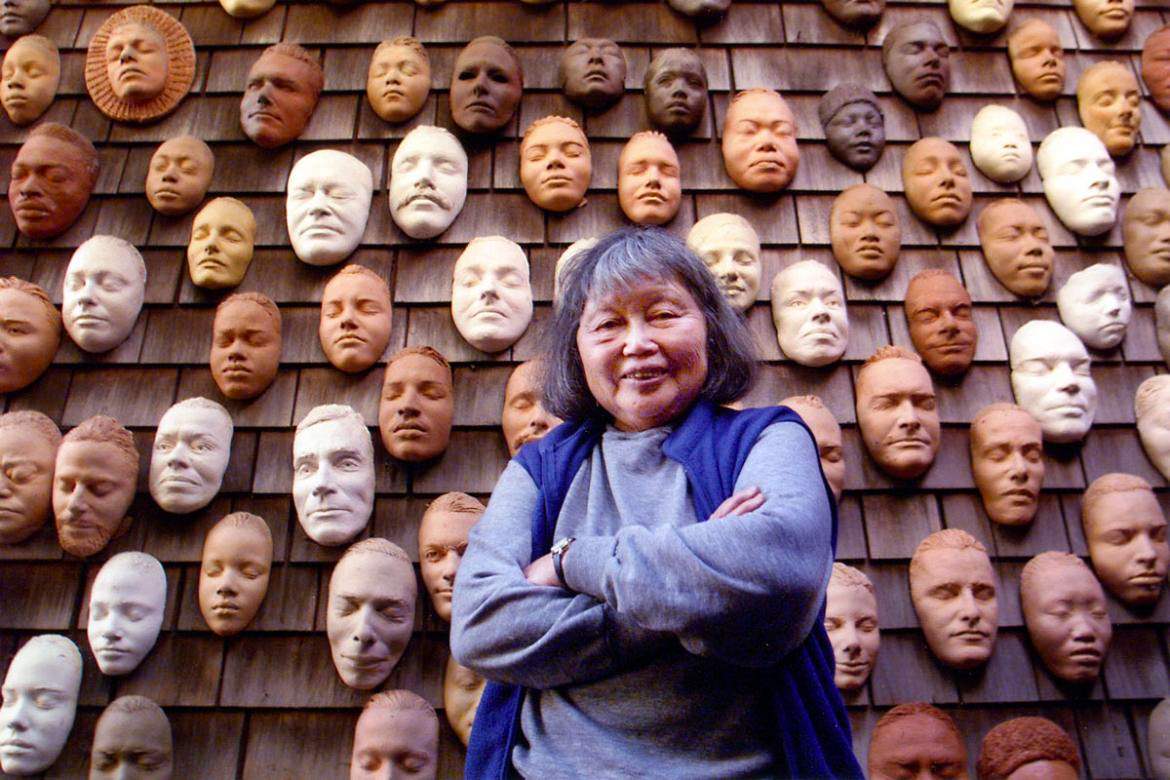
From the mid-1960s through 2000, Asawa created hundreds of individual face masks out of clay. With the Cantor's Asian American Art Initiative, this wall of 233 masks becomes a permanent part of their collection.
Free

|
M
Monday
|
T
Tuesday
|
W
Wednesday
|
T
Thursday
|
F
Friday
|
S
Saturday
|
S
Sunday
|
|---|---|---|---|---|---|---|
2 exhibitions,
The Faces Of Ruth Asawa
From the mid-1960s through 2000, Asawa created hundreds of individual face masks out of clay. With the Cantor's Asian American Art Initiative, this wall of 233 masks becomes a permanent part of their collection.
Free
In the Presence of: Collective Histories of the Asian American Women Artists Association
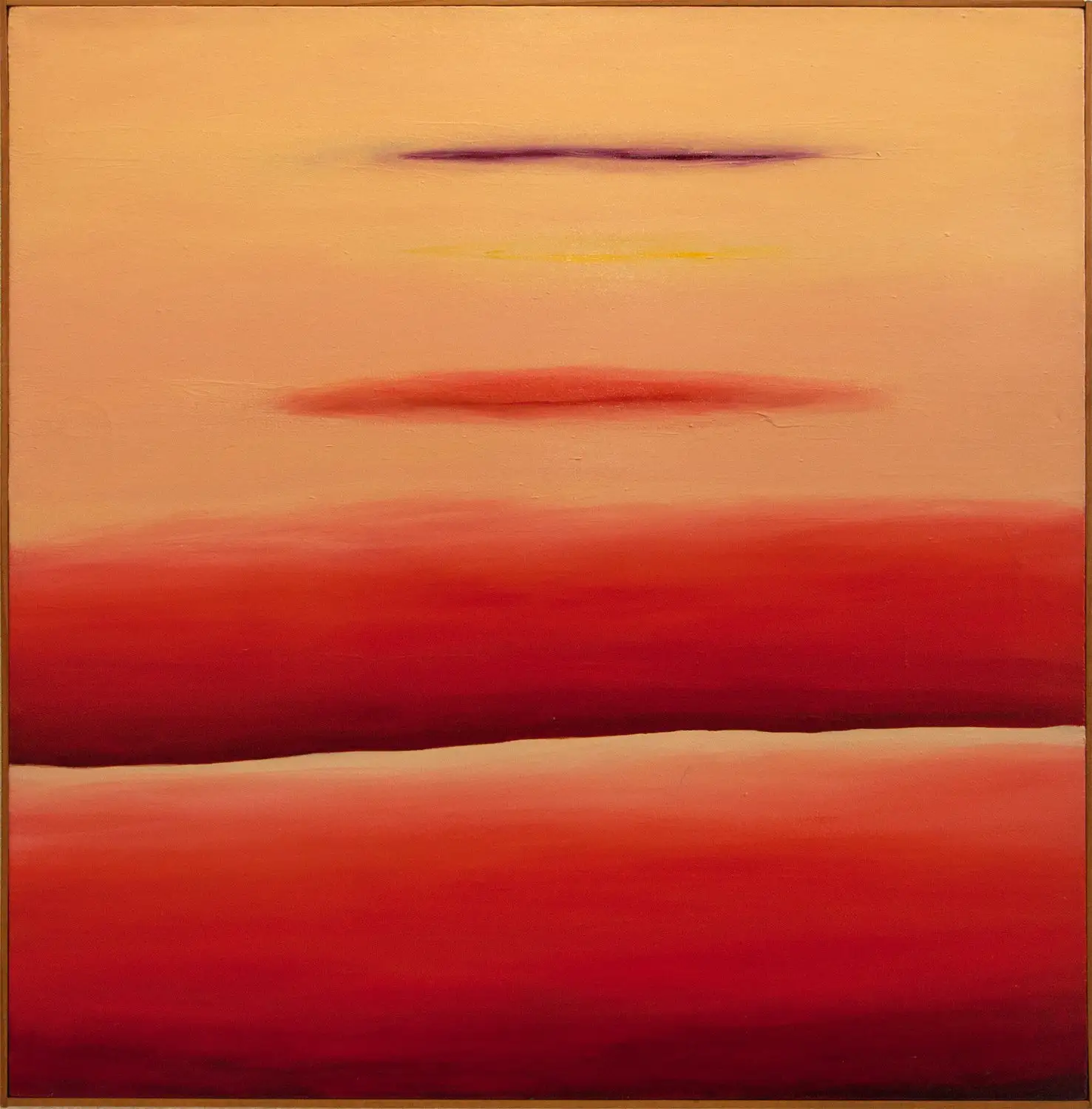
“What is an Asian American woman artist?” Karin Higa’s influential essay from 2002 recounts the historical exclusion of Asian American women from the male-dominated Asian American movement and the second wave feminists of the 1960s and 1970s by tracing the art and lives of the following Asian American women artists: Ruth Asawa, Hisako Hibi, Theresa Hak Kyung Cha, Rea Tajiri, and Hung Liu.
Free
|
||||||
2 exhibitions,
The Faces Of Ruth Asawa
In the Presence of: Collective Histories of the Asian American Women Artists Association
|
3 exhibitions,
When Forms Come Alive
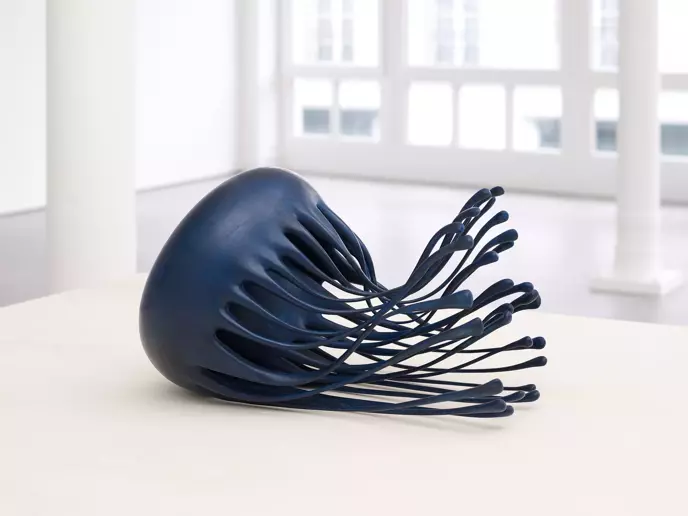
Spanning over 60 years of contemporary sculpture, this exhibition highlights ways in which artists draw on familiar experiences of movement, flux and organic growth.
£18 – £19
|
|||||
3 exhibitions,
The Faces Of Ruth Asawa
In the Presence of: Collective Histories of the Asian American Women Artists Association
When Forms Come Alive
|
||||||
3 exhibitions,
The Faces Of Ruth Asawa
In the Presence of: Collective Histories of the Asian American Women Artists Association
When Forms Come Alive
|
||||||
3 exhibitions,
The Faces Of Ruth Asawa
In the Presence of: Collective Histories of the Asian American Women Artists Association
When Forms Come Alive
|